
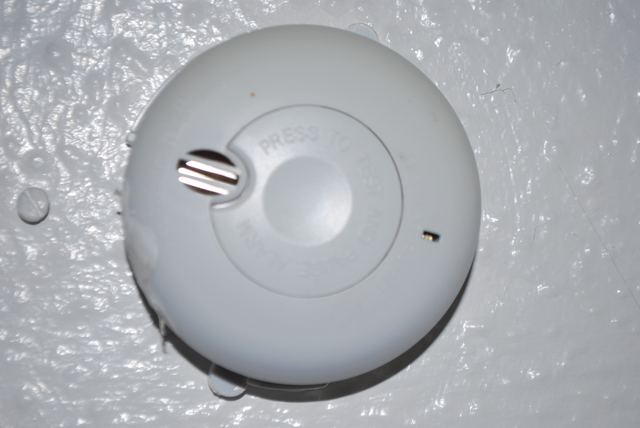
When a home needs hardwired alarms
Victoria: homes built after 1 August 1997 must have alarms connected to 240 volt mains power with a backup battery. Older homes need only standalone battery alarms, though Victoria's fire services recommend mains power or 10-year batteries.
Western Australia: before a home is sold or rented out, its alarms must be permanently connected to mains power. Battery-only alarms are allowed only where there's no hidden space to run wiring and no other suitable spot, such as under a concrete ceiling, and then they need a non-removable 10-year battery.
ACT: hardwired alarms are legally required in houses built after 1 November 1994. Queensland: alarms can be hardwired or run on a non-removable 10-year battery, but hardwired alarms must be replaced with hardwired ones. Northern Territory: an approved alarm is photoelectric and either hardwired or a sealed 10-year lithium unit.
Tasmania: Tasmania Fire Service's timeline says alarms must be hard-wired since 1 August 1997, without saying whether that covers every home. We don't have confirmed hardwiring rules for New South Wales or South Australia yet.
The backup battery and the green light
A hardwired alarm has either a replaceable 9 volt backup battery or a built-in 10-year lithium one. Replaceable batteries need changing every year, and Consumer Affairs Victoria says anyone can change a smoke alarm battery. A 10-year backup lasts the life of the alarm.
The green light tells you mains power is reaching the alarm. If it's off, the alarm or its wiring may have a fault, and that's for an electrician to find. A single chirp roughly once a minute usually means the backup battery is going flat.
Replacing a hardwired set
Every alarm wears out. Fire services in Victoria, Western Australia and the ACT all say to replace smoke alarms every 10 years, mains powered ones included, and the manufacture date is usually on a sticker on the side or back.
Hardwired alarms are often interconnected, so a replacement has to work with the others, which in practice usually means the same brand's range. Models change too. Schneider lists the Clipsal 755RLPSMA4 as discontinued on 24 August 2026 and names the 755PSMA5L as its replacement, so ask the electrician which current model suits your set.
In a New South Wales rental, a hardwired alarm must be repaired or replaced by a licensed electrician, and the landlord has two business days after finding out it isn't working. In Western Australia, only a licensed electrical contractor can connect or disconnect mains-powered alarms.
Battery yes, wiring no
You can
- Hold the test button each month until it beeps, as Victoria's fire services advise.
- Change a replaceable backup battery once a year.
- Vacuum the dust off every six months, as ACT Fire and Rescue suggests.
- Check the green light now and then.
Leave to a licensed electrician
- Installing a new hardwired alarm, or moving one.
- Replacing an alarm that's past its date or shows no green light.
- Interconnecting alarms or adding a wireless module.
- Tracing a wiring fault behind an alarm that won't power up.

If we were replacing ours
If your hardwired alarms are near or past 10 years old, we'd replace the whole set in one visit with a single brand of interconnected photoelectric alarms that have 10-year lithium backups. That ends the yearly battery round and puts every alarm on the same clock. Ask the electrician which model they'll fit, and check it lists AS 3786.
Want a specialist to sort it?
Tell us the job and your postcode. We match the licence-checked local electrician who does this kind of work, and they call you. No ring-around, and your number goes to them alone.