
Shock, smoke, sparks or a hot plastic smell? That comes first
If there's fire or smoke, or someone has had a shock, call 000, and don't touch anyone who may still be in contact with the power. Turn off the main switch only if you can reach it safely. A tingle from a tap, shower or appliance is a warning too, so stop using it and report it. In Western Australia every shock, however small, goes to Western Power on 13 13 51. South Australians call SA Power Networks on 13 13 66, and in South East Queensland it's Energex on 13 19 62.
Who to call for what
| Call | Why them | |
|---|---|---|
| Fire, smoke or someone hurt | 000 | Emergency services first, every time |
| Lines down, or the whole street is dark | Your electricity network | It's their equipment and their job to restore supply. Stay well clear of any fallen line |
| Storm damage to the house | SES on 132 500 | Trees on the roof and water coming in. Then an electrician before anything wet is switched back on |
| Part of your house is out, or something keeps tripping | A licensed electrician | The fault is in your wiring or an appliance, on your side of the meter |
Start with the guide that matches your problem
Power keeps tripping for a safety switch or breaker that won't stay up. Power out in part of the house when some rooms are dead and others aren't. Flickering lights for lights that dim or pulse.
Electric shocks and burning smells for tingles, hot fittings and smells you can't trace. Storm and flood damage for anything that's been wet. Smoke alarm beeping for chirps that won't stop. The tripping troubleshooter asks a few questions and points to the likely cause.
How an electrician tracks a fault down
It starts with your story: what stopped working, when, what was running and whether it had rained. Faults that come and go are the hardest to find, so the pattern you've noticed often matters more than anything visible on the day.
Then they narrow it down, isolating circuits at the switchboard, testing the insulation on the cables and checking connections at outlets, switches, lights and junctions. Common finds are a loose connection that's been heating up, water in an outdoor fitting, a cable nicked during a renovation or chewed in the roof, and appliances leaking to earth.
The fix might be one fitting, a short length of new cable or a remade connection. Sometimes the honest answer is bigger: ageing wiring points to rewiring, and a board that can't cope points to a switchboard upgrade.
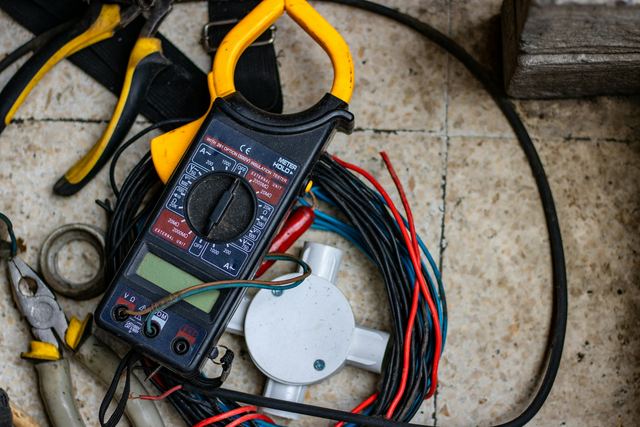
This is where the specialist matters. An electrician who does fault finding all the time, with proper test gear, finds the cause instead of resetting the switch and leaving.
Have this ready when they arrive
- Which switch tripped, and what its label says.
- What was running, and whether it was wet or stormy.
- A room-by-room list of the outlets and lights that don't work.
- Any appliance you've already found and unplugged.
- When it happens: every time, at night, after rain or at random.
- In a rental, the agent's or landlord's details.
What you can safely check
You can
- Look at whether the neighbours have power. If the street is out, it's the network's job.
- Reset a tripped switch once, with things unplugged.
- Unplug appliances one at a time to find a faulty one.
- Change a blown light globe.
Leave to a licensed electrician
- Anything behind a cover or faceplate.
- Tracing a fault in the wiring, a short or a leak to earth.
- Replacing a damaged outlet, switch, fitting, breaker or safety switch.
- Checking anything that's been in water before it's switched back on.
Renting? Repairs are usually the landlord's to arrange
In New South Wales, any electrical fault in a rental is an urgent repair, and the landlord must get urgent repairs done within a reasonable time. In the ACT, a dangerous electrical fault is an urgent repair too, to be done as soon as practicable.
In Western Australia, if the fault is in the property's wiring or a fixed appliance, the landlord must engage a licensed electrical contractor to fix it. Tell the agent or landlord in writing, and if it's dangerous, say so plainly.
The paperwork after a repair
Whether you get a certificate depends on the state and the repair. New South Wales needs a CCEW for any work that repairs, alters or adds to the installation, like-for-like replacement included. Energy Safe Victoria says a licensed electrician must provide a Certificate of Electrical Safety whenever they complete electrical installation work. Western Australia's Electrical Safety Certificate doesn't cover maintenance or like-for-like replacement, and in the Northern Territory a certificate of compliance isn't needed for maintenance or a straight swap of a similar fitting.
Under the Australian Consumer Law, a service you pay for must be done with care and skill. If the same fault is back a week later, call the electrician and ask what they tested and what they found.

If it were our place
We'd do the safe checks once, write down exactly what happens and when, and then stop. Resetting a switch over and over hides the pattern an electrician needs. Then we'd book someone who does fault finding regularly, and before they leave, ask them what caused it and how they know.
Want a specialist to sort it?
Tell us the job and your postcode. We match the licence-checked local electrician who does this kind of work, and they call you. No ring-around, and your number goes to them alone.