
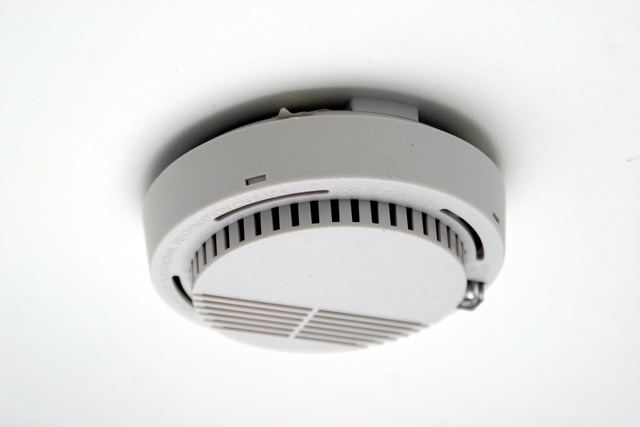
Hardwired, wireless, interconnected: what the words mean
A hardwired alarm, also called a 240 volt or mains-powered alarm, runs off the house power and has a backup battery, so it keeps working in a blackout. A green light shows the mains is connected. A 10-year battery alarm has a sealed lithium battery that lasts the life of the alarm.
Interconnected alarms talk to each other: when one detects smoke, every alarm in the home sounds. Hardwired alarms can be linked by wiring, and battery alarms by choosing wireless interconnected models. Photoelectric alarms react well to smouldering fires and are less prone to cooking false alarms than ionisation types.
The rules by state, in brief
| The headline rule | Hardwired alarms | |
|---|---|---|
| Queensland | Every existing home, owner-occupied included, needs interconnected photoelectric alarms by 1 January 2027 | Must be replaced with hardwired alarms, fitted by an electrician |
| New South Wales | Working alarms on each level of every home, complying with AS 3786 | In a rental, only a licensed electrician can repair or replace one |
| Victoria | Homes built after 1 August 1997 need mains-powered alarms, interconnected if built or largely renovated after 1 May 2014 | Must be installed by a qualified electrician |
| Western Australia | Mains-powered, working alarms no more than 10 years old before a home is sold or rented | Only a licensed electrical contractor can connect or disconnect them |
| South Australia | Not yet confirmed from an official page | Check with the state's fire service before you buy |
| ACT | Hardwired alarms in houses built after 1 November 1994; interconnected on each level of multi-level homes | A hardwired alarm must be replaced with a hardwired one |
| Tasmania | Required in all homes; rentals need mains-powered or non-removable 10-year battery alarms | Tasmania Fire Service notes some alarms need an electrician |
| Northern Territory | Photoelectric alarms meeting AS 3786, hardwired or a sealed 10-year lithium unit | Wiring one in needs an electrical licence |
Each state's full rules are under smoke alarm laws, and the smoke alarm rules checker narrows it down to whether you own, rent out, buy or sell.
Queensland: what to sort before 1 January 2027
By 1 January 2027, every existing Queensland home, townhouse and unit must have interconnected photoelectric smoke alarms. Sales and new or renewed tenancies have needed them since 1 January 2022. Alarms go in every bedroom, in hallways connecting bedrooms to the rest of the home, and on every storey.
If your current alarms are hardwired, the replacements must be hardwired too, and an electrician has to fit them. If you have no hardwired alarms, wireless interconnected alarms with a non-removable 10-year battery connect without wiring, and the Queensland Fire Department says you can install those yourself.
Each alarm must meet AS 3786-2014, be photoelectric with no ionisation sensor, and be less than 10 years old when installed. With the deadline close, we'd book now rather than in the last weeks of December.
What the electrician does
First they look at what you have: each alarm's type and manufacture date (usually on a sticker on the side or back), whether they're interconnected, and whether the wiring to any hardwired ones is sound. Then they place alarms to suit your state's rule, fit and link them, and set one off to prove the rest follow.
Hardwired alarm work is electrical work, so ask for your state's certificate, such as a CCEW in New South Wales, a COES in Victoria or a certificate of testing and compliance in Queensland.
If you're a landlord
In New South Wales, landlords must check alarms and replace removable batteries every year, replace alarms within 10 years of manufacture, and fix a faulty one within two business days. Victorian rental providers have had to arrange annual smoke alarm safety checks for all rental agreements since 25 November 2025.
Queensland landlords must test and clean every alarm within 30 days before a tenancy starts. In both states, the duty can't be handed to the tenant. Electrical rules for landlords covers the rest.
What you can do, and what needs an electrician
You can
- Press and hold each alarm's test button once a month. A broom handle helps with high ceilings.
- Vacuum the dust off your alarms every six months.
- Replace removable batteries every 12 months. The end of daylight saving is a handy reminder.
- Fit battery or wireless 10-year alarms where your state allows them.
Leave to a licensed electrician
- Installing, replacing or moving any hardwired (240 volt) alarm.
- Interconnecting mains-powered alarms.
- Running new wiring to put alarms where the rules now need them.
- Working out why a hardwired alarm's green light is off.
What a good smoke alarm quote spells out
- How many alarms, and exactly where each one goes.
- Hardwired or 10-year battery, and how they'll be interconnected.
- The make and model, and that it meets AS 3786.
- Whether existing wiring is reused or new cable is run.
- The certificate you'll get for any wiring work.

The order we'd do it in
Check the dates first. Fire services in Victoria, WA, the ACT and Tasmania all say to replace alarms every 10 years, so anything that old goes. Then match the new setup to your state: if you have hardwired alarms, stay hardwired and have an electrician interconnect them, and in Queensland, don't leave it until the deadline. Once they're in, test them monthly. An alarm only helps if it works on the night.
Want a specialist to sort it?
Tell us the job and your postcode. We match the licence-checked local electrician who does this kind of work, and they call you. No ring-around, and your number goes to them alone.