
Good reasons to book one
- You're buying an older home and want to know what you're taking on. Pre-purchase electrical inspections covers that case.
- You rent a property out, especially in Victoria, where the law sets a check every 2 years.
- Breakers trip, lights flicker or fittings run warm, and nobody has found out why.
- The house has had DIY work or an extension and you don't know who wired it.
- There's been a storm, a flood or a power surge.
- You're about to add an EV charger, solar or a big appliance to wiring nobody has looked at in years.
What the electrician checks
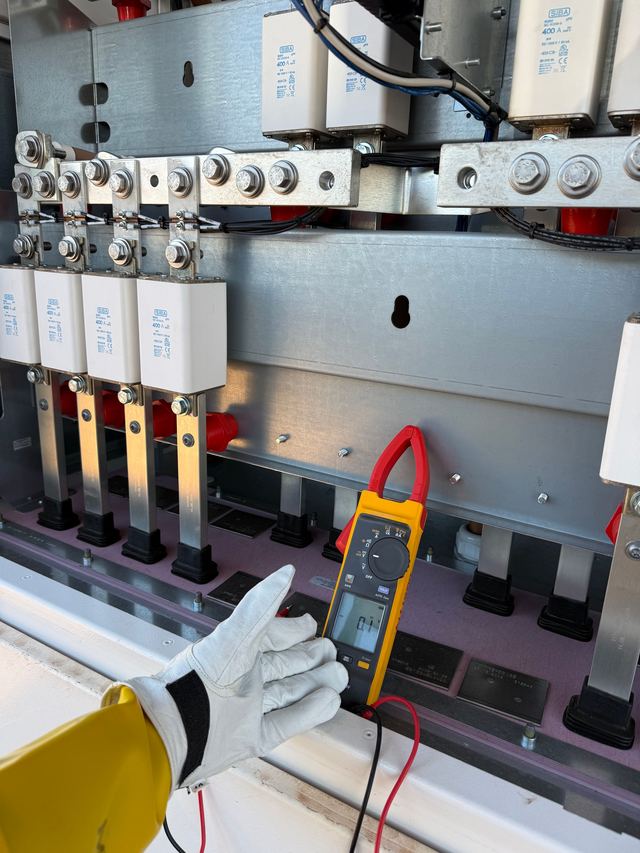
A proper inspection starts at the switchboard: its condition, whether safety switches protect the power point and lighting circuits, and whether those switches actually trip when tested. Then it works through the house, covering power points, switches, light fittings, visible wiring in the roof space and under the floor, earthing, and fixed appliances such as the oven and hot water system.
Instruments matter more than eyes. Testing shows whether insulation is leaking current and whether the earthing works, and neither shows up on a visual check. Some electricians also offer a thermal imaging check, which picks up hot spots in a switchboard or connection.
Victoria's rental check is done to section 4 of AS/NZS 3019, the standard for periodic assessment of electrical installations. For any inspection, it's fair to ask which standard the electrician is working to, so you know what was covered.
Victoria's 2-yearly rental checks
Victorian rental providers must have all electrical installations, fixtures and fittings checked by a licensed or registered electrician every 2 years. The rule applied to agreements entered from March 2021, and from 13 October 2026 it covers every rental property.
Before a lease is signed, the renter must be told the date of the last check and any outstanding recommendations. If there's been no check in the 2 years before a renter moves in, the rental provider has to arrange one as soon as possible, and must hand the latest record to the renter within 7 days of a written request.
The electrician's record should show their name and licence or registration number, the date, the results and any repairs, plus a report prepared in line with section 2 of AS/NZS 3019. Rental electrical safety checks goes through it step by step.
Rentals in other states
Outside Victoria, the rental rules we've confirmed focus on keeping homes safe and fixing faults rather than a set inspection timetable. NSW Fair Trading suggests the condition report note hazards like loose or sparking power points, and a Tasmanian owner can't sign, extend or renew a lease unless the power points and wiring are safe. Queensland and Western Australia have safety switch rules for rentals. Electrical rules for landlords sets them out state by state.
What you should get at the end
An inspection should end with a written report, not a chat at the front door. It should list what was tested, what passed, what didn't, and what the electrician recommends, ranked from urgent to can wait. Photos of problem spots make it far more useful.
A report isn't a compliance certificate. Certificates like the CCEW in New South Wales or the COES in Victoria are issued for electrical work, so any repairs that follow the inspection get one.
In Victoria you'll also hear about Licensed Electrical Inspectors. They inspect prescribed work, such as new consumer mains or solar, within 8 business days of it being finished. That's a required check on new work, separate from the safety inspection you'd book for an older home.
Signs of a rushed inspection
- Nobody tested the safety switches.
- No test instruments came out of the van.
- The roof space and under-floor weren't looked at, even where they're easy to reach.
- A verbal all-clear with nothing in writing, or no licence number on the report.
- Every finding is urgent, and the quote to fix it arrives before the report does.
Before the electrician arrives
You can
- Test each safety switch with its button. NSW Fair Trading suggests every six months; WA's Building and Energy says every three months.
- List anything odd: warm switches, flickering, tripping, tingles from taps.
- Clear the way to the meter box, the roof space hatch and any under-floor access.
- Find old certificates. Victorian owners can ask Energy Safe Victoria to search for one for free.
Leave to a licensed electrician
- Anything behind the switchboard covers.
- Insulation and earth testing on each circuit.
- Any repairs the inspection turns up.

What we'd book
If you've just bought an older home or you're letting one out, book a full inspection with a written report and ask for the findings ranked by urgency. Fix the urgent items straight away and treat the rest as a plan, not a to-do list for next week. Then file the report where you'll find it again. The next electrician through the door will want to see it.
Want a specialist to sort it?
Tell us the job and your postcode. We match the licence-checked local electrician who does this kind of work, and they call you. No ring-around, and your number goes to them alone.