
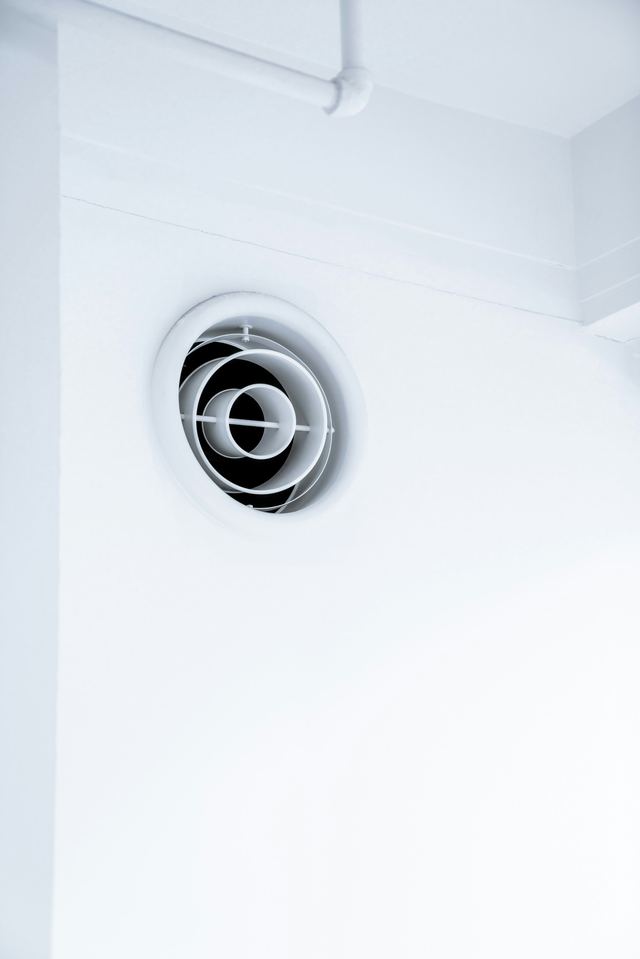
Burning smell from the fan or heat lamps? Switch it off first
Turn the unit off at its wall switch and leave it off. If the smell lingers, or you see smoke or scorching on the ceiling, turn off the main switch if it's safe to reach, get everyone out and call 000. Have an electrician look at a fan or heater that's overheated before it runs again, even if it seems fine the next morning.
Fan, heater or 3-in-1: what are you actually after?
| Exhaust fan | Heat lamps or a 3-in-1 unit | |
|---|---|---|
| What it does | Pulls steam and smells out of the room | Warms the room, usually with a fan and a light built in |
| Power it draws | Not much | A lot more whenever the heat is on |
| What the job often involves | Swapping the old unit, sometimes in the same ceiling hole | Checking the circuit can carry the load, and sometimes a dedicated circuit from the switchboard |
Signs it's time for a new fan, or your first one
A fan that rattles, hums or barely moves a tissue held to the grille is near the end of its life. Mould spots on the ceiling and a mirror that stays fogged say the same thing: the steam has nowhere to go.
The sign people miss is the smoke alarm. Queensland's fire service lists shower steam among the reasons alarms go off for no clear reason, and Victoria's fire services suggest adding an exhaust fan if showers keep setting yours off. Pulling the battery out is never the fix.
What the electrician does up in the ceiling
Most of the job happens from the roof space above the bathroom. The electrician checks the existing cable and circuit, mounts the new unit, connects it to the switch or timer and tests it.
Expect the power to be off for part of the visit. In Queensland, section 33 of the Electrical Safety Regulation 2026 makes the electrician's business responsible for switching off power to the building, so far as reasonably practicable, before a worker goes into the roof space.
In a renovation it's tempting to let one trade do everything. In New South Wales some plumbers hold a qualified supervisor certificate that lets them disconnect and reconnect fixed equipment like a hard-wired water heater, but it doesn't stretch to installing or changing fixed wiring. New fans, heaters and their switches stay with the electrician.
A straight swap or an upgrade: why it changes the paperwork
States treat a like-for-like swap differently, which matters when you ask for your certificate.
New South Wales wants a Certificate of Compliance for Electrical Work (CCEW) for any installing, repairing or altering, so replacing a tired fan with the same kind of fan still gets one, lodged through the Building Commission NSW eCert portal within 7 days.
Western Australia's Electrical Safety Certificate covers installing work other than maintenance and like-for-like replacement, so trading a fan for a heater counts. In the Northern Territory, a similar fitting in the same spot that works the same way and draws no more power needs no certificate of compliance. A heater replacing a fan fails both tests.
In Victoria you get a Certificate of Electrical Safety (COES) whenever an electrician finishes installation work. Queensland's is a certificate of testing and compliance, South Australia's an eCoC, and the ACT's a certificate of electrical safety. Compliance certificates in every state explains each.
One more Queensland rule: in a home with no approved safety switch on the power points, an electrician can't do installation work unless the job includes fitting one, apart from listed exceptions such as emergencies.
What you can do, and what needs a licence
You can
- Run the fan for the whole shower and a while after, or ask for a timer that does it for you.
- Change a blown heat lamp globe once the unit is off and cool. Ausgrid and NSW Fair Trading both make an exception for globes.
- Vacuum dust and lint off the grille while the fan is switched off.
- Photograph the ceiling unit and wall switches so the electrician can plan ahead.
Leave to a licensed electrician
- Replacing a fan, heater or heat lamp unit, even with an identical one in the same hole.
- Moving a unit, adding a timer or changing the switches.
- Running a new circuit from the switchboard for a heater.
- Working out why a fan has gone quiet, slow or hot.
What to ask before anyone cuts into the ceiling
- Where will the fan send the air: outside through a wall, eave or roof, or just into the roof space?
- Will the new unit fit the existing hole, or will the ceiling need cutting or patching?
- Can the circuit carry a heater, or does it need its own circuit from the switchboard?
- Is a safety switch protecting this circuit now, and if not, what would adding one involve?
- Which certificate will I get when it's done, and what's your licence number?
Who to match with
Most electricians can swap an exhaust fan. For a heater upgrade or a renovation, you want one who does bathrooms all the time and is used to fitting in with the plumber and tiler. If a heated towel rail or a warm floor is on the wish list, raise it in the same conversation: heated towel rails and underfloor heating covers those.
Tell us what's in the bathroom now and what you'd like, and we'll find the sparky who suits it.

If it were our bathroom
If steam hangs around after every shower, we'd have the fan replaced with one that sends the air outside, on a timer so it keeps going after you've left. If the room's cold as well, we'd settle the heater question at the same time, because the circuit is the part that matters and it's easier to sort once than twice. Either way, we'd ask for the certificate before the electrician packs up.
Want a specialist to sort it?
Tell us the job and your postcode. We match the licence-checked local electrician who does this kind of work, and they call you. No ring-around, and your number goes to them alone.