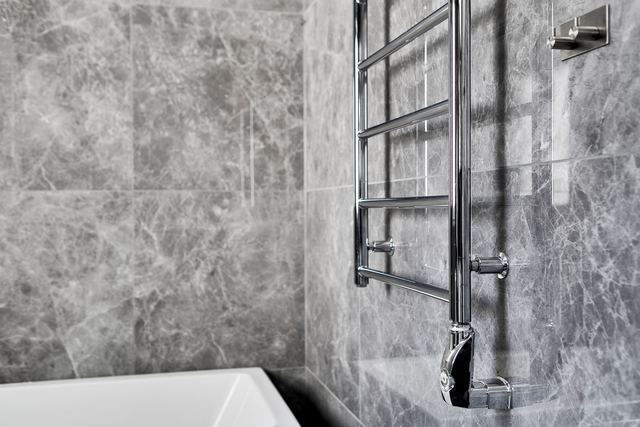
Plug-in or hardwired towel rail?
A plug-in rail hangs on the wall and plugs into a power point, and plugging an appliance in isn't electrical work. The catch is the lead and the outlet. A lead trailing near a basin or shower isn't ideal, and adding a power point in a bathroom is licensed work with strict rules on where it can go.
A hardwired rail has its cable hidden in the wall and runs from a switch or timer, so nothing's on show. Most people choose hardwired in a renovation. Adding one to a finished, tiled bathroom usually means chasing the wall, which brings the tiler back.
Underfloor heating goes in with the floor
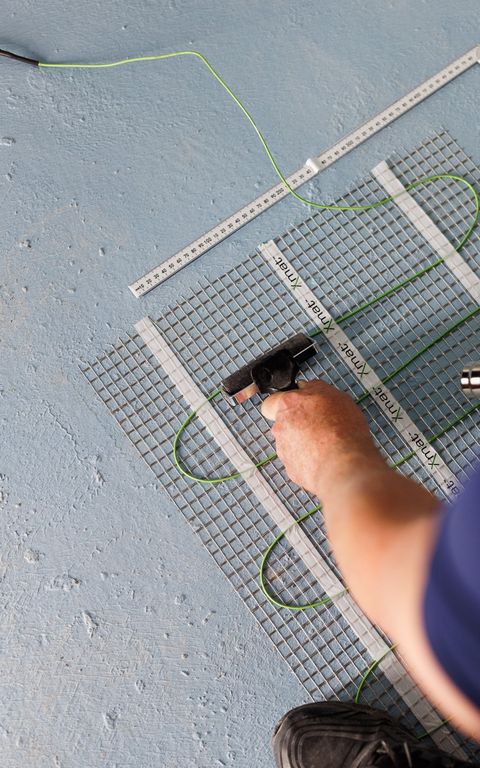
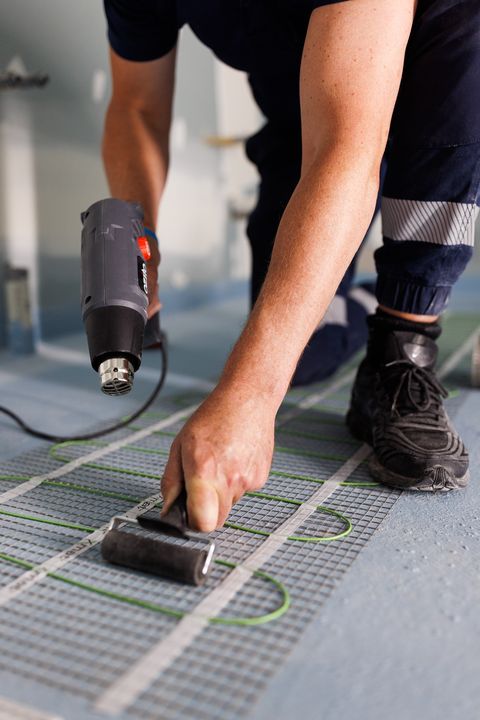
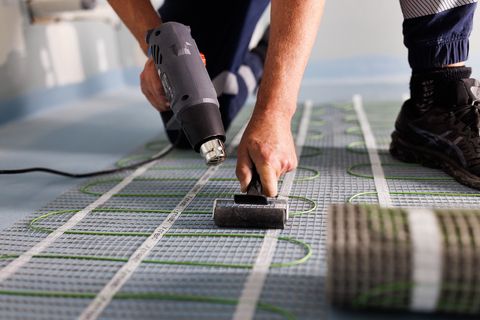
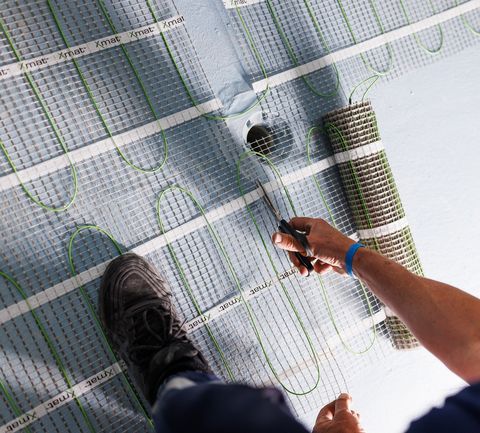
Electric underfloor heating uses a thin heating mat or cable under the tiles, run by a thermostat on the wall. Once it's tiled over, a damaged cable is very hard to get at, so timing matters more than anything else.
A careful electrician tests the heating cable before the tiles go down and again afterwards, and agrees with the tiler who does what on the day. Bigger floor areas draw more power and may need a circuit of their own, so the electrician also checks the switchboard has space and suitable safety switch protection.
How the bathroom job usually runs
Plan
Choose the rail and floor system, and send the product specs and bathroom layout to the electrician.
Rough-in
Before the walls are lined, cable goes to the rail, the thermostat and the switch or timer positions.
Floor
The heating mat goes down and is tested, then the floor is tiled over it.
Fit-off
After tiling, the electrician connects the rail and thermostat, tests everything and gives you the compliance paperwork for your state.
Timers, and who's allowed to do the wiring
Towel rails often run far longer than anyone needs. A timer, or a smart switch you can schedule, keeps them to the hours the bathroom is actually used. Switch ranges like Clipsal's 2000 Series include timers alongside ordinary switches.
In New South Wales, some plumbers hold a certificate to disconnect and reconnect hard-wired appliances, but it doesn't cover installing new fixed wiring. The new cable, circuit and thermostat for a heated floor or rail need a licensed electrician. Look for one who works with bathroom renovators often, because the sequencing with the tiler is where these jobs go wrong.
Who does what in the bathroom
You can
- Pick the rail and floor system and share the specs early.
- Plug in a plug-in rail where there's already a suitable power point.
- Set the timers and thermostat once they're in.
- File the paperwork and floor test results with your house documents.
Leave to a licensed electrician
- Running cable for hardwired rails, thermostats and timers.
- Testing the heating cable before and after tiling.
- Adding a circuit or switchboard space for larger floors.
- Any new power point in a bathroom.

If we were renovating
We'd get the electrician and tiler talking before demolition starts, and put both the towel rail and the floor heating on timers from day one. If underfloor heating is even a maybe, we'd have the cable and thermostat position roughed in while the walls are open. Adding it later means lifting tiles, and nobody wants that.
Want a specialist to sort it?
Tell us the job and your postcode. We match the licence-checked local electrician who does this kind of work, and they call you. No ring-around, and your number goes to them alone.