
Power lines down, or water in the house? Start here
Treat every fallen line as live, and anything it's touching. Ausgrid, Endeavour Energy, Essential Energy and Western Power say to stay at least 8 metres away, Energy Safe Victoria says more than 8 to 10 metres, and Evoenergy at least 10. Call 000 if anyone is in danger, then your network's fault line below. If water has reached power points, the switchboard or appliances, turn off the main switch only if you can reach it standing somewhere dry, and leave everything else off.
The order to do things in
Lines down or sparking: call the network
Not an electrician. The network is responsible for its poles and lines up to your connection point, and its crews make them safe.
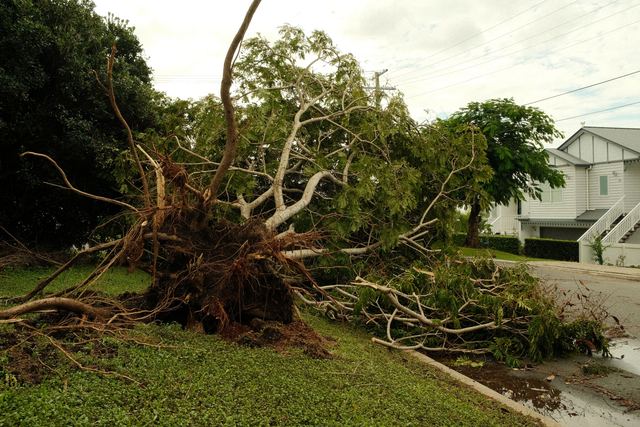
Roof or tree damage: call the SES
The SES on 132 500 is the number for storm and flood help, such as a damaged roof letting water in. Don't climb onto the roof yourself.
Water inside: keep it switched off
Ausgrid says a flood-damaged property must be checked before the power goes back on, and that equipment near the ground, like air conditioners and pool pumps, should stay off until it's inspected. After a cyclone, the Queensland Reconstruction Authority says water through light fittings, the roof space or walls is a reason to have the wiring checked too.
Lightning or a surge: unplug and make a list
Unplug appliances that stopped working, reset a tripped safety switch once, and note what's dead. If it won't reset or you smell burning, leave it off for the electrician.
Fault lines for fallen wires and network emergencies
| Area | Number | |
|---|---|---|
| Ausgrid | Sydney, Central Coast, Hunter | 13 13 88 |
| Endeavour Energy | Greater Western Sydney, Blue Mountains, Illawarra, South Coast | 131 003 |
| Essential Energy | Regional and rural NSW | 13 20 80 |
| CitiPower | Melbourne CBD and inner suburbs | 13 12 80 |
| Powercor | Western Melbourne and western Victoria | 13 24 12 |
| Jemena | North-west Melbourne | 131 626 |
| United Energy | South-east Melbourne, Mornington Peninsula | 13 20 99 |
| AusNet Services | Northern and eastern Melbourne, eastern Victoria | 13 17 99 |
| Energex | South East Queensland | 13 19 62 |
| Ergon Energy | Regional Queensland | 13 16 70 |
| Western Power | Perth and WA's main grid | 13 13 51 |
| Horizon Power | Regional WA off the main grid | 13 23 51 |
| SA Power Networks | South Australia | 13 13 66 |
| TasNetworks | Tasmania | 132 004 |
| Evoenergy | ACT | 13 10 93 |
| Power and Water | Northern Territory | 1800 245 090 |
Surge and lightning damage
A nearby strike, or a surge when the power comes back, can kill anything with a circuit board, and sometimes damages power points, smoke alarms or a safety switch. Signs include a burnt smell from one outlet, scorch marks, or several devices dying at once.
Bundaberg Regional Council advises unplugging electrical items and external TV aerials during severe weather, which is sensible anywhere storms are common. For the house itself, the usual protection is a surge protection device at the switchboard. Whole-house surge protection explains what it does and doesn't cover.
Getting the power reconnected after a flood
Some networks won't reconnect a flooded home until it's been checked. SA Power Networks won't reconnect an inundated property until an electrician has tested and repaired the wiring and provided a certificate of compliance. After the 2025 Mid North Coast floods, Essential Energy required every flooded property to be inspected, tested and repaired, with a Certificate of Compliance for Electrical Work lodged, before the power went back on.
If you're claiming on insurance, ask the electrician for a written report of what they tested, what was damaged and what they replaced, with photos. Your insurer will tell you what else it needs.
What's safe for you after a storm
You can
- Stay well clear of fallen lines and anything they rest on.
- Unplug appliances that got wet or stopped working.
- Photograph the damage before anything is cleaned up.
Leave to a licensed electrician
- Testing and repairing wiring, power points and switchboards that got wet.
- Replacing surge-damaged outlets, smoke alarms or safety switches.
- Issuing the certificate a network may need before reconnecting.

What we'd do once the storm passes
We'd make the outside safe first: the network for lines, the SES for the roof. Then we'd leave anything that got wet switched off and get an electrician who does storm and flood work, because they'll know what the network and your insurer want to see. If it was a surge rather than water, we'd list everything that died before they arrive, so the right circuits get tested first.
Want a specialist to sort it?
Tell us the job and your postcode. We match the licence-checked local electrician who does this kind of work, and they call you. No ring-around, and your number goes to them alone.