Same spot, or somewhere new?
If the pendant goes exactly where a light is now, the electrician disconnects the old fitting and connects the new one to the same wiring. Most of the time goes into assembling the pendant, setting the drop and getting it to hang straight.
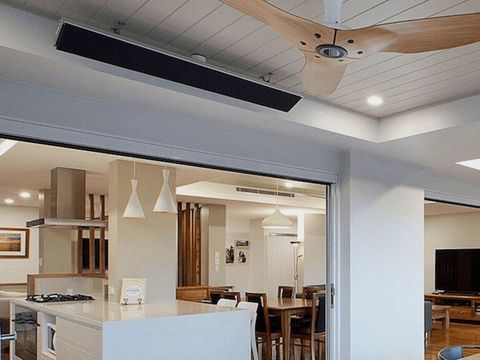
Pendants rarely want to be where the builder put the light. Over an island or dining table, they need to line up with the furniture, not the room. That means a new light point, and in a single-storey home the cable usually runs through the roof space. Under a second storey or a concrete ceiling there's no easy access, so the choice is cutting and patching plaster, or a ceiling bar or hook that offsets the drop.
An electrician who does a lot of renovation lighting will ask about the furniture layout before they look at the ceiling.
Weight and height
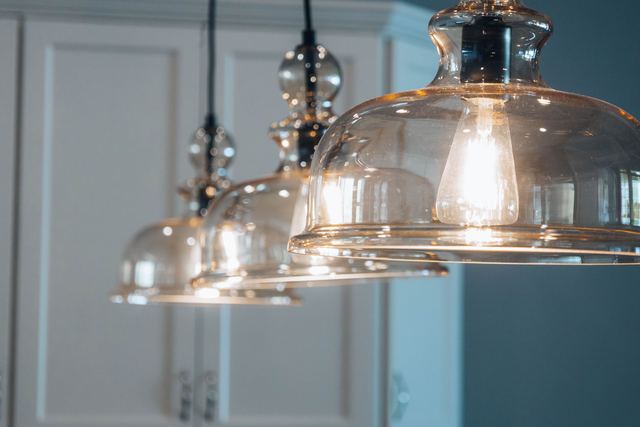
A light glass shade hangs happily from a standard ceiling fitting. A heavy concrete, metal or multi-light pendant needs fixing to a ceiling joist, or to a support added above the plaster. Give the electrician the weight from the product page when you book.
High voids and stairwells are another job again. A taller platform ladder or scaffold may be needed, so send photos with something in them for scale. Measure the drop you want before ordering: most cords can be shortened on site, but few can be lengthened.
Dimmers and LED pendants
Not every LED pendant dims, and not every dimmer suits LED. Check the fitting says dimmable, and have the electrician match a dimmer rated for the total load. Clipsal's Wiser micro module dimmer, for example, dims LED lights up to 200 W, and its Iconic smart dimmer is rated 300 W at 240 V. A mismatch shows up as flicker, buzzing or lights that never go fully off.
Buying from an overseas website? Send the electrician the link before you order. In-scope electrical equipment can't be sold in Australia unless it carries the Regulatory Compliance Mark (RCM).
Before the electrician arrives
You can
- Choose the fitting and note its weight, drop length and whether it dims.
- Mark the centre of the island or table on the ceiling with painter's tape.
- Measure where you want the bottom of the shade to sit.
- Unbox it and check every part is there.
- Change globes once the pendant is up.
Leave to a licensed electrician
- Disconnecting the old light and connecting the pendant.
- Moving or adding a light point, or adding a switch.
- Fixing a support for a heavy fitting.
- Fitting a dimmer that suits the LEDs.
Even a straight swap comes with paperwork
In New South Wales, the electrician has to lodge a Certificate of Compliance for Electrical Work for like-for-like replacements as well as new work. Other states have their own certificates and timing, set out in compliance certificates by state. Ask for yours when the job's done.

What we'd do before ordering
We'd decide exactly where the pendant hangs before buying it, then send the electrician the product link, the weight and a photo of the ceiling. That one message tells them whether it's a quick swap or a new light point, whether it needs a support, and which dimmer will work. If you're hanging several, ask for them on one switch and one dimmer, and roll any other lighting changes into the same visit.
Want a specialist to sort it?
Tell us the job and your postcode. We match the licence-checked local electrician who does this kind of work, and they call you. No ring-around, and your number goes to them alone.