
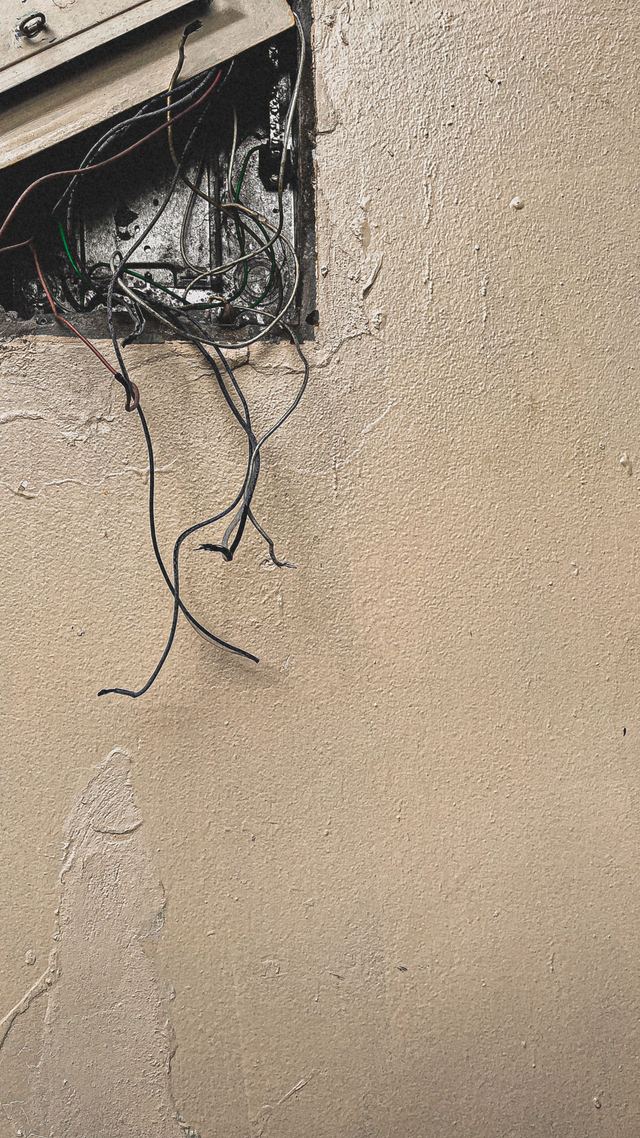
Seen crumbling insulation or bare wire? Leave it alone
Don't touch it, tape it or push it back into the wall. Turn that circuit off at the switchboard if you can do it safely, and keep people away from the spot. If you smell burning or see smoke, call 000. Get an electrician to look at it before the circuit goes back on.
How old wiring gives itself away
You usually won't see the cable itself, and you shouldn't go looking. The house drops hints instead: a ceramic fuse box, switches and power points that look decades old, lights that flicker for no clear reason, and fuses or breakers that trip more as you add appliances.
Stay out of the roof space to check. Crawling over brittle cable is a risk in itself, and in Queensland a business must, so far as reasonably practicable, switch the power off before its worker goes into a roof space. The electrician will decide how to inspect it safely.
Why rubber insulation fails
Rubber doesn't last forever. Heat from old light fittings bakes it, so it's often at its worst right where the cable meets a light. It hardens, cracks when it's moved and can drop off the copper in flakes. Cloth braids fray, and the oldest circuits may have no earth wire at all.
That's why it so often turns up during another job. An electrician goes to replace a light, moves the cable, and the insulation breaks up in their hands. At that point, connecting anything new to it isn't a sensible option, and a good electrician will tell you so.
What the electrician does
Inspects and tests
They look at the switchboard and the cable they can safely reach, then test each circuit's insulation and earthing with instruments. The test results say more than looking ever can.
Sorts old from newer
Plenty of older houses have had some circuits replaced over the years. A useful report says which circuits are original and which aren't.
Checks for asbestos before cutting
Rewiring means working in ceilings and walls. Victoria's Asbestos Hub says a home built or renovated before 1990 likely contains asbestos, so a careful electrician asks about it first.
Quotes partial or full replacement
Sometimes the worst circuits go first, often the lighting, where heat has done the most damage. Often it's better to rewire the lot and upgrade the switchboard together.
Certifies the new work
Once the new circuits are in and tested, you get your state's compliance certificate for the work.
If the house is a rental
In Tasmania, an owner can't enter into, extend or renew a tenancy unless the power points and the wiring in the walls and ceiling are safe and supply electricity. In Victoria, rentals need an electrical safety check every 2 years, and old cable is one of the things that visit can turn up. Rental electrical safety checks covers each state.
Safe for you, and for the electrician only
You can
- Note lights that flicker, switches that feel warm, or circuits that trip.
- Tell the electrician the house's age and any renovations you know about.
- Stay out of the roof space and leave old fittings where they are.
- Ask for a written report on which circuits are original.
Leave to a licensed electrician
- Inspecting and testing the wiring and earthing.
- Swapping any light, switch or power point on old cable.
- Rewiring circuits and upgrading the switchboard.
- Working out the asbestos risk before cutting into walls and ceilings.

If it were our house
Once an electrician has found rubber or cloth wiring, we'd stop adding to it: no new lights, power points or appliances on those circuits until they're replaced. We'd have a rewiring specialist test the whole house, then do the switchboard and the worst circuits together, rather than patching one room at a time.
Want a specialist to sort it?
Tell us the job and your postcode. We match the licence-checked local electrician who does this kind of work, and they call you. No ring-around, and your number goes to them alone.