
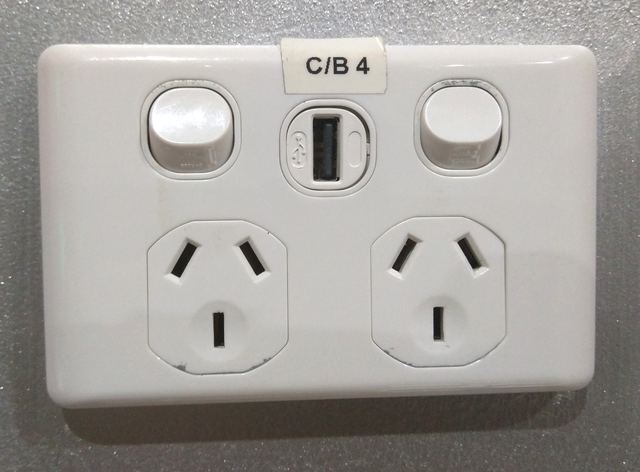
Where they make sense
The spots that suit them are wherever something is always charging: beside the bed, at the end of the kitchen bench, at a study desk, in a teenager's room, or by the entry where phones get dropped. There, a USB power point frees both sockets and gets rid of the plug packs.
Where you charge something once a week, a good plug-in USB charger does the same job and you can move it. That's an honest reason not to bother in every room.
What to check before buying
- Ports. Newer phones, tablets and many laptops use USB-C. Decide how many USB-A and USB-C ports you want in each spot.
- Output. Charging speed varies a lot between models. If you want to charge a laptop, or charge quickly, read the output on the spec sheet, not just the box.
- Range. Choose one from the same range as your other switches so it matches. Clipsal's Iconic range, for example, includes USB chargers alongside its switches and power points. Switch ranges compared shows the main ones.
- Compliance mark. In-scope electrical equipment can't be sold in Australia without the Regulatory Compliance Mark (RCM), so be wary of unmarked imports.
Why it's a job for an electrician
Energy Safe Victoria is clear that changing a power point isn't a DIY job, however small it looks. A USB power point also has electronics inside, so it's bulkier than a standard one, and the electrician checks it fits the wall box and that the existing wiring is in good shape.
In Victoria, power points are an example of non-prescribed work, and the electrician must give you a Certificate of Electrical Safety within one month of completing it. Other states have their own paperwork, so ask for it either way.
Any licensed electrician can do this job. The one worth getting does several in one visit, matches them to your existing switches, and mentions anything worrying they notice along the way.
The swap is licensed work
You can
- Work out which power points have chargers in them all the time.
- Count the USB-A and USB-C devices charged in each spot.
- Pick a model and range, and send the electrician the product code.
- Use a plug-in USB charger anywhere a swap isn't worth it.
Leave to a licensed electrician
- Changing the power point over, even in the same spot.
- Checking the wall box depth and the condition of the wiring.
- Adding a new power point where there isn't one.
- Doing several at once so the whole house matches.

Our honest view
We'd do the bedsides and the kitchen bench, and leave the rest. Book them together so it's one visit, and while the electrician is there, point out any power point that's loose, cracked or warm. If you're also moving to a new switch range, change the lot at once so everything matches.
Want a specialist to sort it?
Tell us the job and your postcode. We match the licence-checked local electrician who does this kind of work, and they call you. No ring-around, and your number goes to them alone.