
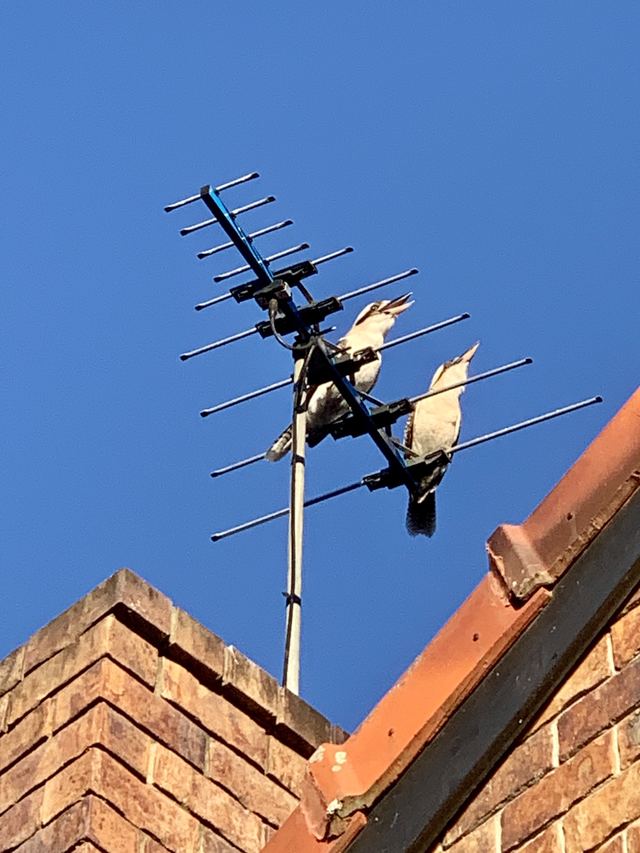
Antenna or cable down after a storm? Keep clear of the power line
If an antenna, mast or cable has come down across or near the power line to your house, stay well back and keep everyone else away. Call your electricity network's fault line, not an antenna installer or an electrician, and don't try to move it or reach it from the roof. For storm damage to the house itself, the SES is on 132 500.
Who does what on an antenna job
Pointing, replacing or adding an antenna, and running its cable to the TV points, is signal work. Antenna specialists do it, and some of them are electricians as well.
Electrical licensing laws deal with this kind of equipment in different ways. Western Australia's licensing regulations, for example, exempt work on communications, computer, radio or TV equipment, but not the power supply circuits feeding it above 50 volts AC. Other states word their rules differently, so ask anyone you're considering what they're licensed for.
The power side isn't in doubt anywhere. A new or moved power point, or anything at the switchboard, is electrical work for a licensed electrician, and you get your state's certificate for it: a COES in Victoria, a certificate of testing and compliance in Queensland, or an Electrical Safety Certificate in Western Australia, which the contractor has 28 days to hand over.
When an electrician should be part of the job
- A power point behind a wall-mounted TV, so no cords hang down the wall.
- Moving an existing power point to where the TV unit now sits.
- Extra power points for a soundbar, set-top box or games console.
- Cutting into a wall that already carries mains cables to run TV or data cable down it.
- A data point beside the TV for a wired internet connection. Data cabling and TV points covers that side.
Hiding the cables behind a wall-mounted TV
The look most people want is a TV on the wall with nothing dangling below it. The safe way to get there is a power point fitted behind the screen, with the antenna and data cables coming out of their own wall plates beside it.
What isn't safe is pushing an extension lead or power board into the wall cavity to hide it. Plug-in cords aren't made to live inside a wall, and if one overheats in there, nobody sees it until it's too late.
Storms, cyclones and antennas
Antennas sit on the highest, most exposed part of the house, so wind finds them first.
In Queensland's cyclone Wind Region C, which takes in coastal areas north of Bundaberg, the Queensland Reconstruction Authority says aerials and satellite dishes should be fixed through the roof sheeting into the roof structure, not just to the sheeting. Bundaberg Regional Council also advises unplugging electrical items and external TV aerials during severe weather, which is sensible wherever storms hit hard.
Afterwards, if the picture's gone and the antenna looks bent, judge it from the ground. If anything electrical got wet, leave it off until a licensed electrician has checked it.
What you can try first, and what's licensed
You can
- Retune the TV (a channel scan), especially after a storm.
- Check the antenna lead is pushed firmly into the TV and the wall plate.
- Ask a neighbour whether their picture is playing up too. If it is, the fault may not be yours.
- Look at the antenna from the ground. Stay off the roof.
Leave to a licensed electrician
- New or moved power points for the TV, soundbar or other gear.
- Any work at the switchboard.
- Checking anything electrical that got wet in a storm before it's switched back on.
- A power point that's loose, cracked or scorched.
Questions for whoever quotes
- Are you a licensed electrician, or will someone else fit the power point?
- What's causing the poor picture: the antenna, the direction it faces, the cable or the wall plates?
- How will the antenna be fixed to the roof, and does that suit the wind where we live?
- Will every TV point be tested, and the cables labelled?
- If there's electrical work, which compliance certificate will I get?
Getting the right person
If the job is only the antenna, an antenna specialist may be all you need, and that's fine. If there's a power point, a wall-mounted TV or new cable inside the walls, tell us what you're planning and we'll match you with an electrician who does TV and data work, so the lot is done in one visit.

If it were our lounge room
If a new TV is going on the wall, we'd book an electrician who does TV and data work to fit a power point and a data point behind the screen, with the antenna cable coming to a plate beside them, all in one visit. If the problem is only the picture, we'd retune, check the leads and ask the neighbours before paying anyone to climb a ladder.
Want a specialist to sort it?
Tell us the job and your postcode. We match the licence-checked local electrician who does this kind of work, and they call you. No ring-around, and your number goes to them alone.