
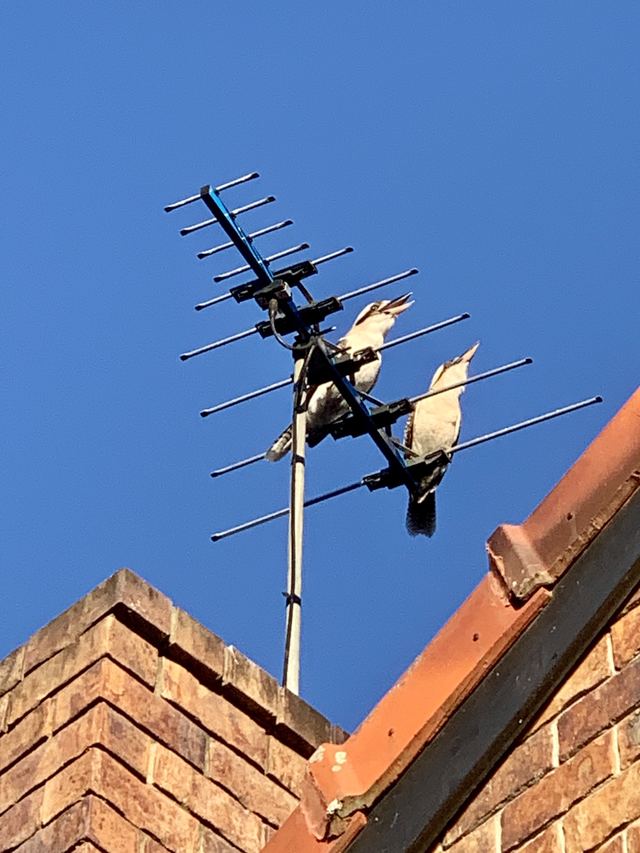
Where Melbourne antennas point
Most of the city: Mount Dandenong
ACMA says the main high-power Melbourne transmitter broadcasts in VHF on channel Block A from the top of Mount Dandenong, about 33 km east of the CBD. All of the main broadcast towers stand on that summit.
The CBD's shadow and the inner west
Tall buildings can block the main signal, so a repeater on Bourke Place in the CBD fills in. West of the city, in Footscray, Seddon, Kensington and Yarraville, more UHF antennas face it, though most homes there still use Mount Dandenong, which sits on a similar bearing.
South Yarra, Windsor and Prahran
Households here mainly use the South Yarra repeater on the Como building, and a significant share of UHF antennas in Richmond, Burnley and Hawthorn point at it too.
The Dandenong foothills
Being close to the towers doesn't guarantee a clear signal. The foothills can block it, so four repeaters sit at the bottom of the mountain: Ferntree Gully, Upwey, Selby and Monbulk.
Mornington Peninsula
Mount Dandenong is about 65 km from Arthurs Seat, and hilly ground gets in the way. Over 90% of antennas ACMA counted in Safety Beach faced the local repeater there, along with around 34% in Mount Martha.
Why your neighbour's antenna isn't always the right guide
ACMA's 2022 survey found many Melbourne households still point at Mount Dandenong even where a local repeater may give a stronger signal. Part of the reason is history: plenty of antennas went up before the repeaters existed.
So when you replace an antenna, ask the installer which site gives the best signal at your address, and whether you need a VHF antenna, a UHF one or a combined model. Most antennas ACMA saw were at roof height or lower, but west of the CBD as many stood 10 metres above the ground as sat at roof height.
Antenna down after a gusty change? Keep away from the power line
The north-westerlies ahead of a Melbourne cold front can reach gale force, and in the March 2010 storm winds topped 100 km/h at Melbourne Airport. If an antenna or mast has come down on or near the line into your house, stay well back and call your network's faults line: CitiPower 13 12 80, Powercor 13 24 12, Jemena 131 626, United Energy 13 20 99 or AusNet 13 17 99. Don't climb up to it.
Where an electrician comes in
A wall-mounted TV looks best with a power point behind it and the antenna and data cables coming through their own plates beside it. That power point is electrical installation work, so it needs a Registered Electrical Contractor and comes with a Certificate of Electrical Safety.
We haven't confirmed exactly how Victoria's licensing rules treat antenna cabling on its own, so ask anyone quoting what they're licensed to do. If the job mixes antenna work with new power points or cable inside walls that carry mains wiring, an electrician who also does TV and data work can do the lot in one visit.
Before you call anyone
You can
- Run a channel scan on the TV, especially after a storm.
- Check the coaxial lead hasn't worked loose at either end.
- Ask the neighbours whether their picture is playing up too.
- Look at the antenna from the street to see if it's bent or turned.
Leave to a licensed electrician
- A new or moved power point behind or beside the TV.
- Extra power points for a soundbar, console or set-top box.
- Anything at the switchboard.
- Checking power points or gear that got wet before they're used again.

If it were our lounge room
We'd retune and check the leads first, then ask the installer which transmitter or repeater suits our street before replacing anything. If a new TV is going on the wall, we'd get the power point, data point and antenna plate done together by an electrician who does TV and data work, so nobody has to open the wall twice.
Want a specialist to sort it?
Tell us the job and your postcode. We match the licence-checked local electrician who does this kind of work, and they call you. No ring-around, and your number goes to them alone.