
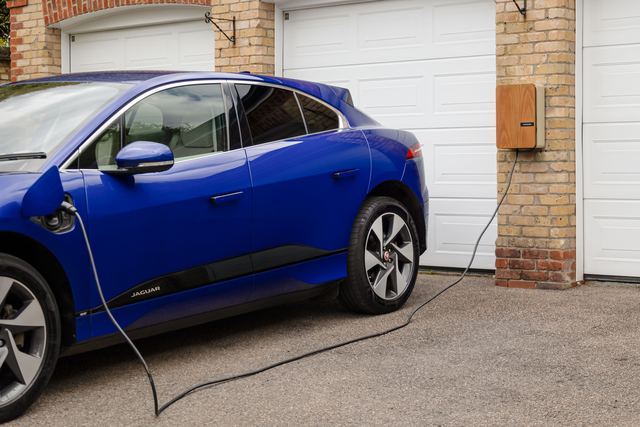
What's specific to charging at home in Adelaide
The approval rule changed in 2026
SA Power Networks used to need approval, through its Portal, for chargers rated above 20 amps on single phase or 25 amps per phase on three phase. In a news item dated 11 September 2026, it said a charger that isn't vehicle to grid capable no longer needs approval. Older advice online may not have caught up.
Vehicle to grid is still different
A charger that can send power from the car back into the grid still needs an application to SA Power Networks before it's installed. If you're thinking of using the car as a home battery one day, say so in the first conversation.
A power point needs no approval
Charging from a regular 10 or 15 amp power point doesn't need SA Power Networks' approval. For short daily drives, that can be all a household needs.
Solar on Flexible Exports
Exporting solar installed since 1 July 2023 has to work with Flexible Exports. If your internet connection drops, exports ramp down to 1.5 kW until it's back, so a charger that soaks up your surplus puts that solar to work instead.
Summer sun on the charger
Adelaide has reached 46.6 °C. Fronius notes its Wattpilot Flex may limit charging power in direct sunlight outdoors, which is a good reason to ask about a shaded wall or the garage when the installer picks a spot.
Single phase or three-phase in an Adelaide home?
Most charger ranges come in both. Wallbox makes the Pulsar Plus as a 7.4 kW single-phase unit and as 11 kW and 22 kW three-phase units, and MG's ChargeHub 7 runs on single phase while the ChargeHub 11 is three-phase. Your car's own onboard charger caps the speed either way.
If you're on single phase and want a three-phase charger, SA Power Networks treats that as a change to your connection. It assesses the request and may inspect, then invites your electrician to book the alteration. If the house needs more supply as well, you only apply for the increase.
Older Adelaide homes and the board
A wall charger needs its own circuit and room on the switchboard. In stone cottages and early Housing Trust homes, that can mean a switchboard upgrade in Adelaide first. In slab-era suburbs it's more often a question of spare space. The electrician should check before you buy the charger, not after.
We haven't confirmed any current South Australian rebate for home chargers, so don't count on one. EV charger rebates by state is where we track what's confirmed.
Your part, and the installer's
You can
- Work out how many kilometres you drive on an ordinary day.
- Check whether your car came with a portable charging lead.
- Ask your solar installer, or look in the inverter app, to see if you're on Flexible Exports.
- Photograph the closed meter box and the board for the quote.
Leave to a licensed electrician
- Installing the charger on its own circuit, or a new 15 amp power point.
- Checking the board, the supply and the total load on the house.
- Lodging any application SA Power Networks still needs, such as for vehicle to grid.
- Issuing the eCoC for the installation.
Worth asking an Adelaide charger installer
- Does this charger need any application to SA Power Networks?
- Will my board need work, or just a new circuit?
- Can it charge from my solar surplus on Flexible Exports?
- Am I better on single phase, or is three-phase worth the connection change?
- Where would you mount it so it isn't in full afternoon sun?
- What's your CBS licence number, and when will the eCoC arrive?

Our take for Adelaide
We'd start with how far you drive, then have the electrician check the board before choosing a charger. For a single car on single phase, a 7 kW unit or even a 15 amp point covers plenty of households. If you've got solar, we'd pick a charger that can run on the surplus, and mount it out of the western sun.
Want a specialist to sort it?
Tell us the job and your postcode. We match the licence-checked local electrician who does this kind of work, and they call you. No ring-around, and your number goes to them alone.