
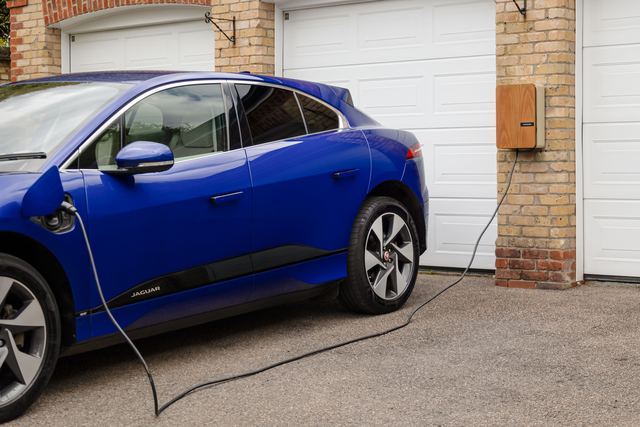
What shapes a charger job in Brisbane
Units and townhouses
At the 2021 census, 14.7% of Brisbane residents lived in apartments and 11.4% in townhouses or terraces. If your home is part of a body corporate scheme, charger wiring can touch common property even when the charger sits in your own car space.
High-set houses with a carport underneath
The space under a high-set Queenslander is often tall enough for a carport, which makes it a natural spot for a charger. Ask how far the cable has to run from the board, and whether the board can take a new circuit.
Old boards and the safety switch rule
Queensland law stops installation work in a home with no approved safety switch on the power points, unless the job includes fitting one. In an older house, that can add a safety switch to the charger quote.
Solar on the roof
Energex's basic connection limits household solar export to 5 kW per phase. A solar-aware charger sends spare solar to the car rather than the grid, which suits a home that makes more in the day than it uses.
In a unit or townhouse: getting body corporate approval
Read the by-laws first
Even for a charger inside your own lot, your scheme's by-laws may set the type of charger or require approval.
Find out whether it touches common property
If the charger connects to common property wiring in any way, you need approval under section 187 of the Standard Module. Wiring inside your lot can still be common property, so ask the electrician to trace where the supply would come from.
Take a written plan
The body corporate can weigh the building's electrical capacity, whether your charger suits it (a three-phase unit, for example), what it means for other owners who want one later, and how your power use will be metered and charged. A plan from a licensed electrician answers most of that.
Committee or general meeting
A modest installation that meets the set conditions can be approved by the committee. Anything else goes to a general meeting as an ordinary resolution, and either way the body corporate must act reasonably.
After it's approved
You keep the charger in good condition and stick to any conditions. Some schemes may decide a shared charger on common property suits the building better than one per owner.
In a house: what the electrician checks
First the supply and the switchboard. A board without spare space, or still running fuses, may need work before the charger: switchboard upgrades in Brisbane covers that.
If a bigger charger needs another phase, the electrician lodges an Electrical Work Request through Energex's Electrical Partners Portal, which also lets your retailer know. We couldn't confirm Energex's current rules for home chargers on its own website, so ask the electrician what Energex needs for the charger you have in mind.
For speed, the EV charging time calculator shows what a power point or a wall charger would add for your car. When the work is connected, you get a certificate of testing and compliance.
Yours to do, and the electrician's
You can
- Ask the body corporate manager how charger requests are handled in your scheme.
- Note where you park and roughly how far that is from the switchboard.
- Write down your usual daily driving distance before choosing a charger size.
- Keep the approval and any conditions with your lot papers.
Leave to a licensed electrician
- Installing the charger on its own circuit, plus any safety switch it needs.
- Tracing whether the supply runs through common property.
- Lodging an Electrical Work Request with Energex if another phase is needed.
- Issuing the certificate of testing and compliance once it's connected.
Before you say yes
- Will this charger connect to common property wiring, and can you put that in writing for the body corporate?
- Can the building's supply handle my charger, and others later?
- Does my switchboard have an approved safety switch and room for a new circuit?
- What does Energex need to know about this charger?
- Can it charge from my solar surplus, now or later?

What we'd do in Brisbane
In a unit or townhouse, we'd get a licensed charger installer to look before asking the body corporate, so the motion goes in with a real plan rather than a guess. In a house, we'd settle the switchboard and safety switch question first, then size the charger to the car we actually drive and the kilometres we cover each day.
Want a specialist to sort it?
Tell us the job and your postcode. We match the licence-checked local electrician who does this kind of work, and they call you. No ring-around, and your number goes to them alone.